Table of Contents
- What Auto Detailing Actually Covers (And How It Differs from Valeting)
- Paint Correction Services: When a Simple Wash Is Not Enough
- Ceramic Coating Benefits: Protection That Outlasts a Wax
- Paint Protection Film Cost and What Drives the Price
- Auto Detailing for Prestige Vehicles, Performance Cars and Motorbikes
- How to Choose a Professional Detailer: What to Look For
- Protecting Your Car in Harsh Northern Weather
- Frequently Asked Questions
Last Updated: August 28, 2026
What Auto Detailing Actually Covers (And How It Differs from Valeting)
Auto detailing is a comprehensive process of cleaning, restoring, and protecting a vehicle’s surfaces far beyond a standard wash or valet. While valeting focuses on surface-level cleanliness, detailing addresses paintwork, interior surfaces, glass, wheels, and protective coatings at a deeper level. At Aberdeen Diamond Detailing, we define it simply: detailing is about restoring and preserving, not just cleaning.
A basic valet removes visible dirt. Auto detailing removes contamination embedded in the lacquer, corrects microscopic scratches from improper washing, and applies protection that lasts. The difference is visible under direct light.
Detailing services typically fall into three broad categories:
- Paint correction and restoration – addressing swirl marks, scratches, oxidation, and surface defects
- Protection application – ceramic coatings, paint protection film, and sealants
- Deep cleaning and decontamination – iron fallout removal, clay bar treatment, engine bay cleaning, and interior detailing
The scope of any appointment depends on the vehicle’s condition and the owner’s goals. A brand-new car might need only decontamination and coating application. A vehicle with years of incorrect washing may require full multi-stage paint correction before protection is applied.
Paint Correction Services: When a Simple Wash Is Not Enough
Most people assume that because their car looks clean, the paintwork is in good condition. It almost never is.
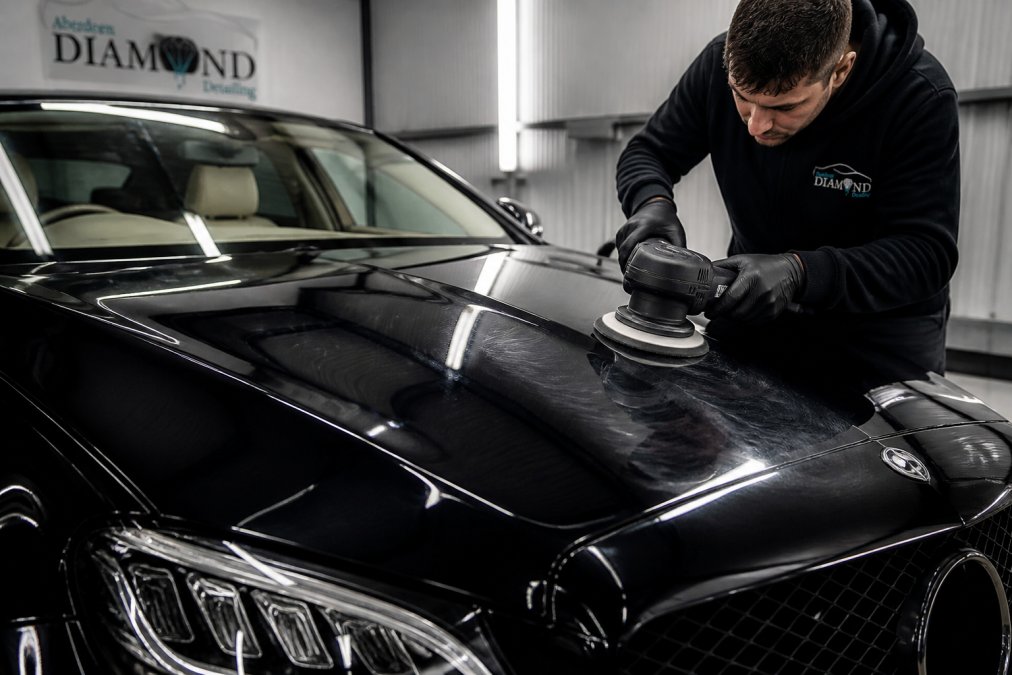
Paint correction services exist because daily driving and routine washing inflict cumulative damage that no shampoo can reverse. The question is not whether your paintwork has defects, it does. The question is how severe they are and what level of correction is warranted.
What Swirl Marks and Oxidation Actually Do to Your Paintwork
Swirl marks are fine, circular scratches in the clear coat caused by incorrect washing technique, automatic car washes, and dry wiping. Under direct sunlight, they scatter light, making dark paint look dull rather than deep and reflective.
Oxidation occurs when the clear coat breaks down due to UV exposure, leaving paint looking chalky, faded, or milky. According to the Society of Motor Manufacturers and Traders guidance on vehicle care, prolonged exposure to the elements is a primary cause of paint deterioration on UK vehicles, particularly given the country’s variable climate.
Left untreated, both conditions worsen. Swirl marks deepen into scratches reaching the base coat. Oxidation progresses until the paint itself fails. Neither can be addressed by applying a coating on top; protection applied over damaged paint simply locks in the damage.
The Correction Process: Stages and What Each One Achieves
Paint correction works through a staged process, with each stage targeting different defect severity:
| Stage | What It Addresses | Typical Result |
|---|---|---|
| Single-stage polish | Light swirls, minor hazing | 60-70% defect removal |
| Two-stage correction | Deeper swirls, light scratches, mild oxidation | 80-90% defect removal |
| Multi-stage correction | Heavy scratches, severe oxidation, water etching | Maximum achievable correction |
Each stage uses progressively finer compounds and polishing pads, finishing with refinement polish to maximise gloss. The goal is the best achievable result without a respray, as some scratches penetrate deeper than the clear coat can safely give.
A common mistake is applying ceramic coating or PPF directly to uncorrected paint. The coating bonds beautifully and protects whatever is underneath. If that is swirl marks, those marks are now sealed in permanently.
Ceramic Coating Benefits: Protection That Outlasts a Wax
Ceramic coatings represent a fundamental shift from traditional paint protection. Conventional wax degrades within weeks to months. A professionally applied ceramic coating chemically bonds to the paintwork, forming a hard, semi-permanent layer that resists water, contamination, UV radiation, and minor surface abrasion.
Ceramic coating benefits extend beyond aesthetics. Coated paint becomes significantly easier to maintain. Water beads and sheets off the surface, carrying dirt with it. Contamination sits on top of the coating and rinses away more readily, reducing washing effort and frequency.
Ceramic coatings are not scratch-proof. They add hardness and chemical resistance, but a stone chip or careless key will still cause damage. Think of a coating as the best possible foundation for protection, not an absolute barrier.
How Long a Professional Ceramic Coating Actually Lasts
Longevity depends on product grade, preparation quality, and post-application maintenance. Consumer-grade products typically last under a year. Professional-grade coatings applied by trained detailers are different. Many carry manufacturer warranties of two to five years, with some premium products rated longer under correct maintenance.
Preparation, decontamination, paint correction, and panel wipe-down, allows the coating to bond properly and achieve its rated durability. Maintenance matters too. Ceramic-coated cars should be washed using pH-neutral shampoo and the two-bucket method. Automatic car washes, abrasive cloths, and harsh chemicals degrade the coating prematurely.
Paint Protection Film Cost and What Drives the Price
Paint protection film is the most physically strong form of paint protection available. Unlike ceramic coating, PPF is a thermoplastic urethane film applied in sections to the vehicle’s surface. It absorbs stone chips, minor impacts, and road debris that would otherwise damage paint directly. Self-healing variants use heat to close surface scratches in the film itself.

Paint protection film cost varies considerably, driven by factors worth understanding before requesting a quote. According to Which? guidance on car protection products, film quality, coverage area, and installer experience are the primary variables determining price and long-term outcome.
Main cost drivers are:
- Film grade and brand – premium films with self-healing properties cost more than entry-level products
- Coverage area – full front-end packages require significantly more material and labour than partial applications
- Vehicle complexity – complex curves and unusual panel configurations increase installation time
- Preparation work required – vehicles needing paint correction before film application carry additional cost
Contact Aberdeen Diamond Detailing directly for a quote tailored to your vehicle and coverage requirements.
Full Wrap vs Partial Coverage: Which Makes Sense for Your Car
The right answer depends on how the vehicle is used and what protection is needed.
Partial coverage targets high-impact zones: front bumper, bonnet leading edge, wing mirrors, door edge guards, and sills. These areas take the majority of stone chip and road debris damage. A well-specified partial package covers what matters most at lower cost.
Full wrap provides complete protection across every painted surface. It makes sense for high-value prestige vehicles, new supercars, or owners wanting maximum protection regardless of cost. Full wrap also offers consistent surface finish, which matters for long-term resale value.
If budget is limited, spend it on the front end. That is where the damage happens.
Auto Detailing for Prestige Vehicles, Performance Cars and Motorbikes
Prestige and performance vehicles require different detailing approaches, not simply because they are expensive but because their paintwork and construction demand greater care. Soft lacquers on certain European marques scratch more easily. Carbon fibre panels require specific products. Alcantara interiors cannot be treated like standard fabric.
The risk during detailing itself is where inexperienced operators fail. Incorrect machine polisher settings, inappropriate compounds, or unfamiliarity with the substrate cause more damage than years of neglect. Experience with specific vehicle types matters when choosing a detailer.
Motorbikes present unique challenges. Exposed metal components, intricate frames, painted fairings, and chrome or brushed finishes require different techniques and products. A detailer working primarily on cars may lack experience with high-end motorcycles. Specialist knowledge of fairing removal, tank protection, and appropriate metal sealants makes a genuine difference.
Never allow a detailer to use a rotary polisher on soft lacquers or thin clear coats without confirming they have measured paint depth first. Cutting through the clear coat is irreversible without a full respray.
How to Choose a Professional Detailer: What to Look For
The auto detailing industry has no mandatory licensing or formal regulatory body in the UK, so the quality gap between operators is significant. Choosing the wrong detailer can result in damaged paintwork, premature coating failure, or PPF that lifts within months.
As documented in the Institute of the Motor Industry’s professional standards guidance, professional competence is best assessed through verifiable training, demonstrated work, and transparent processes.
Look for these signals when evaluating any detailer:
- Portfolio of completed work – documented before-and-after photography across a range of vehicles
- Transparency about products used – professional detailers specify brands and grades, not vague references to “premium products”
- Paint depth measurement – any detailer offering paint correction should measure paint thickness before starting
- Clear process explanation – ability to explain what they will do and why
- Appropriate workspace – paint correction and coating application require controlled indoor environments; outdoor work is a red flag
Questions Worth Asking Before You Book
These questions are worth putting to any detailer you are seriously considering:
- What film or coating brand do you use, and can you show me the product data sheet?
- Can you show me examples of vehicles you have done that are more than two years old, still in the client’s ownership?
- Do you measure paint depth before correction, and what happens if the paint is too thin to correct safely?
- What aftercare is required, and what does that mean for my washing routine?
- Do you carry professional indemnity insurance?
The answers will tell you whether you are dealing with a professional or a weekend operator.
Protecting Your Car in Harsh Northern Weather
Northern weather presents specific challenges that make paint protection more important. Road salt used during winter is corrosive to unprotected metal and paint edges. Freeze-thaw cycles cause stone chips to expand. Low winter sun makes swirl marks and surface defects more visible.
Vehicles driven through winter without adequate paint protection accumulate damage faster than those in milder climates. A ceramic coating provides excellent chemical resistance to salt contamination and makes post-winter decontamination easier. PPF adds physical protection against stone chips and road debris that winter driving generates.
Many car owners wait until spring to think about protection. By then, a winter’s worth of salt contamination, stone chips, and scratches has already done its work. The better approach is to have protection applied before the first hard frost.
Auto detailing is not a luxury reserved for concours vehicles. For any car driven through a northern winter, proper paint protection is the most cost-effective way to maintain its condition and long-term value.
Maintaining a vehicle’s finish through variable weather and daily driving is a genuine challenge that compounds over time if left unaddressed. Aberdeen Diamond Detailing specialises in paint protection film applications and professional ceramic coatings, giving vehicle owners durable defence against conditions that cause the most damage. Whether you are protecting a new car from day one or restoring a vehicle that has accumulated years of surface defects, contact Aberdeen Diamond Detailing to discuss the right approach for your vehicle.
Frequently Asked Questions
What is the difference between car valeting and auto detailing?
Valeting covers cleaning and basic cosmetic care: a wash, interior hoover, and perhaps a wax. Auto detailing goes considerably further. It includes paint decontamination, machine polishing to remove defects, ceramic coating or paint protection film application, and meticulous attention to every surface. A full detail can take one to several days, whereas a valet is typically completed in a few hours. The result is a measurably higher standard of finish and longer-lasting protection.
Is ceramic coating worth the investment for daily drivers?
For a daily driver, the ceramic coating benefits are practical rather than purely cosmetic. The coating bonds to the paintwork and creates a hydrophobic surface that repels water, road grime, and bird droppings, making the car easier to clean and reducing the risk of contamination etching into the clear coat. A professionally applied ceramic coating from a specialist typically lasts several years, far outperforming supermarket or retail products. For anyone who keeps a car long-term, the protection is genuinely worthwhile.
How often should I have my car professionally detailed?
It depends on how the car is used and what protection is already in place. A vehicle with a quality ceramic coating or paint protection film needs less frequent intervention because the surfaces resist contamination. Most owners benefit from a full detail every one to two years, with maintenance washes or top-up treatments in between. Cars exposed to heavy road salt, tree sap, or industrial fallout may need more regular decontamination to prevent long-term paint damage.
What are the benefits of paint protection film compared to ceramic coating?
Paint protection film provides physical impact resistance that ceramic coating cannot match. It absorbs stone chips, minor abrasions, and road debris before they reach the paintwork. Many modern PPF products also self-heal light surface scratches when exposed to heat. Ceramic coating, by contrast, excels at repelling chemical contamination and making surfaces easier to clean. The two are often used together: PPF on high-impact areas and ceramic coating over the top for added hydrophobic protection across the whole vehicle.
This article was written using GrandRanker