
Table of Contents
- What Paint Protection Film Actually Does
- The Core Benefits of Paint Protection Film for Cars
- Does PPF Affect Car Resale Value?
- Paint Protection Film vs Ceramic Coating: Which Do You Need?
- How Long Does PPF Last and What Affects Its Lifespan?
- Drawbacks and Limitations to Know Before You Book
- How to Choose and Install Paint Protection Film
- Conclusion
- Frequently Asked Questions
Last Updated: 17 September 2026
What Paint Protection Film Actually Does
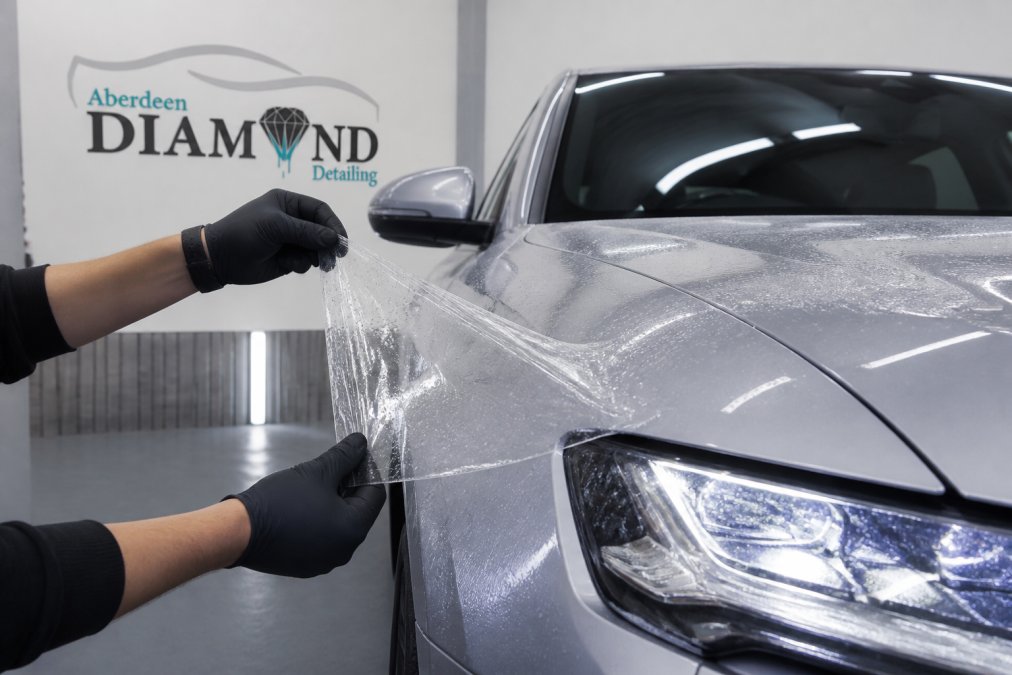
Paint protection film is a transparent urethane layer applied over a vehicle’s painted panels to absorb physical damage before it reaches the clear coat. At Aberdeen Diamond Detailing, we treat it as the first line of defence for anyone who wants to keep a car’s finish genuinely intact rather than merely shiny. The film takes the hit, so the paint underneath does not have to.
Self-Healing Top Coat Explained
The top layer of quality film is elastomeric: light scratches and swirl marks close up again when the surface is warmed by sunlight or hot water. This is the single feature that separates a proper paint protection film from a cheap vinyl wrap, and it is the reason day-to-day wash marring does not accumulate the way it does on bare paint.
The Core Benefits of Paint Protection Film for Cars
The benefits of paint protection film for cars come down to three things: physical impact absorption, chemical resistance, and long-term value retention. A car wearing film keeps its original paint underneath, which matters enormously at resale because original paint cannot be replaced.
Protection Against Stone Chips and Road Debris
Gravel thrown up by lorries, loose chippings on rural routes, and grit spread in winter all strike the leading edges of a car at speed. Film absorbs that energy in the urethane layer instead of the clear coat. Bonnets, front bumpers, wing mirrors, and the leading edge of the roof take the worst of it, which is why those panels are usually covered first.
Defence Against Salt, Grit and Harsh Weather
Coastal air carries salt, and winter roads carry grit and brine. Both attack unprotected paint over time, dulling it and encouraging surface corrosion at stone chip sites. A sealed film layer keeps those contaminants off the paint entirely, so washing removes them from the film rather than from the finish itself.
Does PPF Affect Car Resale Value?
Yes, and in a good way, provided the film is professionally installed and properly maintained. A car with unblemished original paint under intact film presents far better at inspection than one with a resprayed bonnet or a peppered front end. Buyers of prestige and performance vehicles check paint condition closely, and original paint is a genuine selling point.
Where film can hurt value is when it is poorly fitted: lifting edges, trapped dirt, or yellowing film look worse than no film at all. Installation quality is the whole equation.
Paint Protection Film vs Ceramic Coating: Which Do You Need?
They do different jobs, and the honest answer is that many owners benefit from both. Paint protection film is a physical barrier against impact and abrasion. Ceramic coating is a chemical layer that makes the surface hydrophobic, easier to clean, and glossier. Film stops a stone; coating stops a watermark.
| Feature | Paint Protection Film | Ceramic Coating |
|---|---|---|
| Primary job | Absorbs impact and abrasion | Repels water and contaminants |
| Stops stone chips | Yes | No |
| Self-healing | Yes, on quality film | No |
| Gloss enhancement | Moderate | High |
| Typical lifespan | Several years | One to three years |
| Best on | Bonnet, bumper, mirrors | Whole car, over film |
If your priority is protecting paint from physical damage, film is the answer. If you want easier washing and deeper gloss, coating delivers that. Applied together, coating goes over the film.
How Long Does PPF Last and What Affects Its Lifespan?
A professionally installed film typically lasts several years, though the exact figure depends on film grade, sun exposure, and how the car is washed. Manufacturer warranties vary, so check the specific product rather than assuming a blanket number.
Three factors shorten film life more than anything else:
- Automatic brush car washes, which abrade the surface and lift edges
- Aggressive polishing over the film, which damages the self-healing layer
- Neglected edges, where dirt ingress eventually causes lifting
Hand washing with a pH-neutral shampoo and prompt removal of bird droppings will keep film looking clear for far longer.
Ask your installer which specific film brand and grade they use, and get the warranty terms in writing. Film quality varies enormously, and the difference shows up at year three, not year one.
Drawbacks and Limitations to Know Before You Book
Film is not invisible forever, and it is not a substitute for careful driving. Over many years, even good film can take on a slight amber tint, particularly on white cars. Edges can lift if they were not wrapped properly. Removal, while straightforward on quality film, is a job for a professional.
There is also a cost consideration: full-front coverage is a meaningful outlay, and full-body coverage considerably more. That said, the comparison most owners should make is against the cost of respraying a bonnet or front bumper, which is often higher and always reduces originality.
Never let a general valeting outfit machine-polish over paint protection film. Rotary polishing generates heat that can permanently cloud the self-healing layer, and the damage is not reversible.
How to Choose and Install Paint Protection Film
Choosing well comes down to film grade, installer skill, and coverage pattern. Installation is not a DIY job: it requires a dust-controlled space, precise cutting, and experience wrapping edges so they stay put. Ask to see completed work on a car that has worn film for a few years, not just a freshly finished one.
A sensible approach:
- Decide your coverage: front end, track pack, or full body
- Confirm the film brand and grade in writing
- Ask how edges are wrapped and whether panels are removed
- Inspect a car with older film before committing
- Confirm the warranty covers lifting and yellowing, not just defects
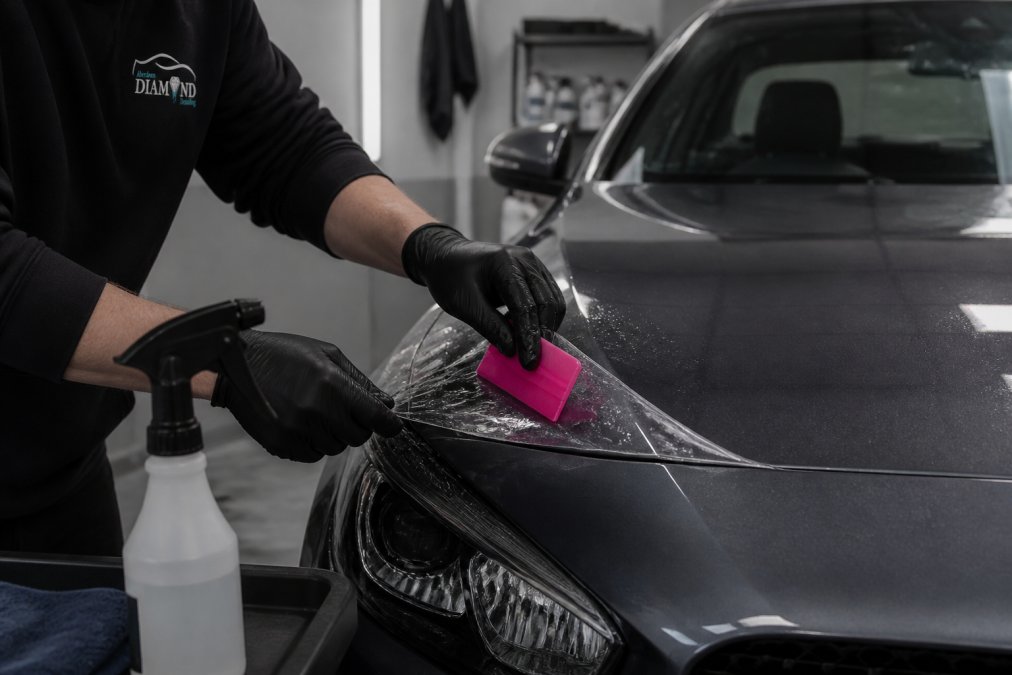
At Aberdeen Diamond Detailing, this is the work we do every day on prestige and performance vehicles, from paint correction through to film and coating. The details that matter, edge wrapping, panel preparation, and film grade, are exactly where a cheap job and a proper one diverge.
Conclusion
Paint protection film is the only aftermarket product that genuinely prevents stone chips and road rash rather than merely hiding them. If you plan to keep your car, or sell it into a market that pays a premium for original paint, the case for film is straightforward. Choose the film grade carefully, choose the installer more carefully, and treat the finished surface with the same care you would bare paint.
Frequently Asked Questions
Does PPF affect car resale value?
Paint protection film can help preserve resale value because it keeps the original paintwork in better condition. Stone chips, scratches and UV fading are the kinds of damage that buyers inspect closely, and a car with intact factory paint often commands a stronger price. PPF is removable, so it does not alter the paint underneath. Keep your installation paperwork to show prospective buyers the car has been protected.
How long does paint protection film last on a car?
Quality paint protection film can last for several years, with its lifespan influenced by the brand, film thickness, and how the car is used. Regular washing, avoiding harsh chemicals, and parking under cover where possible can help extend its duration. A professional installer can confirm the expected lifespan for the specific film they apply.
Is paint protection film worth the cost?
Whether PPF is worth it depends on your car’s value and how you use it. If you drive a prestige or performance vehicle on motorways and rural roads, the film protects against stone chips, salt and grit that would otherwise require respraying. For a low-value daily driver kept in a garage, the maths may not stack up. Ask a specialist for a quote based on your car and usage.
Can you wax over paint protection film?
Yes, you can apply wax over paint protection film, though many owners prefer a ceramic coating designed for PPF because it adds gloss and makes washing easier. Avoid abrasive polishes or machine compounding directly on the film, as these can dull the surface. Always use products labelled as safe for PPF, and check with your installer before applying anything new.