
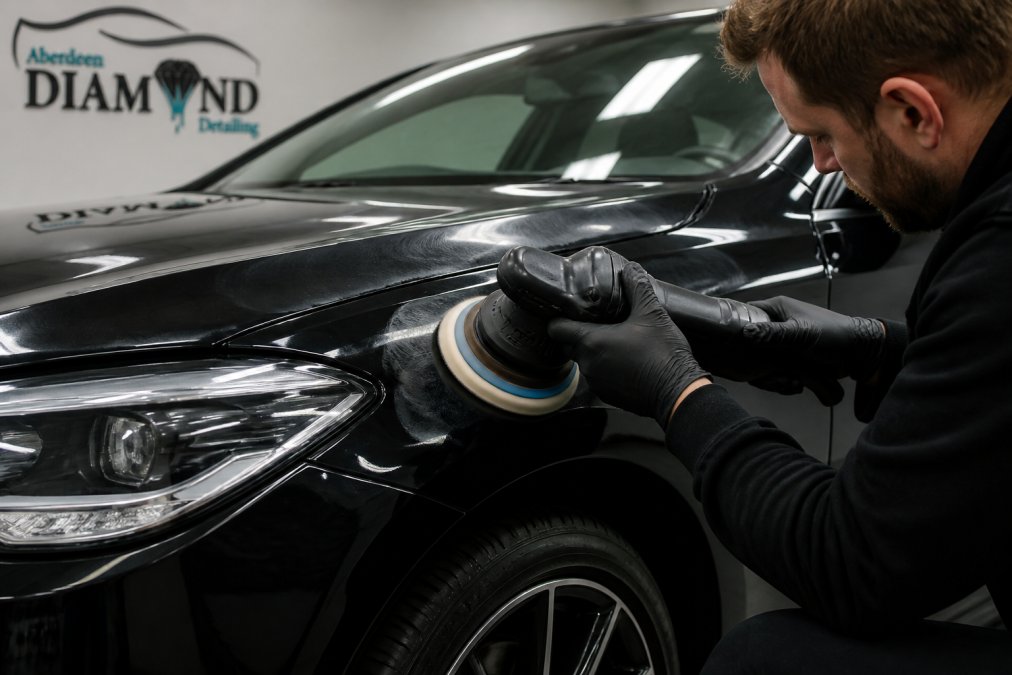
Why Paint Condition Determines Whether Ceramic Coating Works
Ceramic coating seals and amplifies the surface beneath it, every scratch, swirl mark, and paint defect gets locked in permanently once the coating cures. This is the core principle that drives every decision about paint correction.
Ceramic coating is a liquid polymer that bonds chemically to a vehicle’s paint surface, forming a hard, hydrophobic layer that repels water, contaminants, and UV radiation. It does not fill scratches or correct defects. It simply protects whatever surface it touches.
Paint correction is the process of removing surface defects from a vehicle’s clear coat using machine polishing compounds and abrasive pads, restoring clarity and gloss before any protective layer is applied. The two processes are fundamentally different: one restores, the other protects.
Whether you need paint correction before ceramic coating depends entirely on your paintwork’s current condition. A flawless surface can go straight to coating. A surface with visible swirling, oxidation, or light scratches cannot, without trapping those defects permanently.
The Stages of Paint Correction Explained
Paint correction ranges from a light single-stage polish to a multi-stage process taking a full day or more of skilled machine work. Understanding the stages helps you match the level of correction to your paintwork’s actual condition.
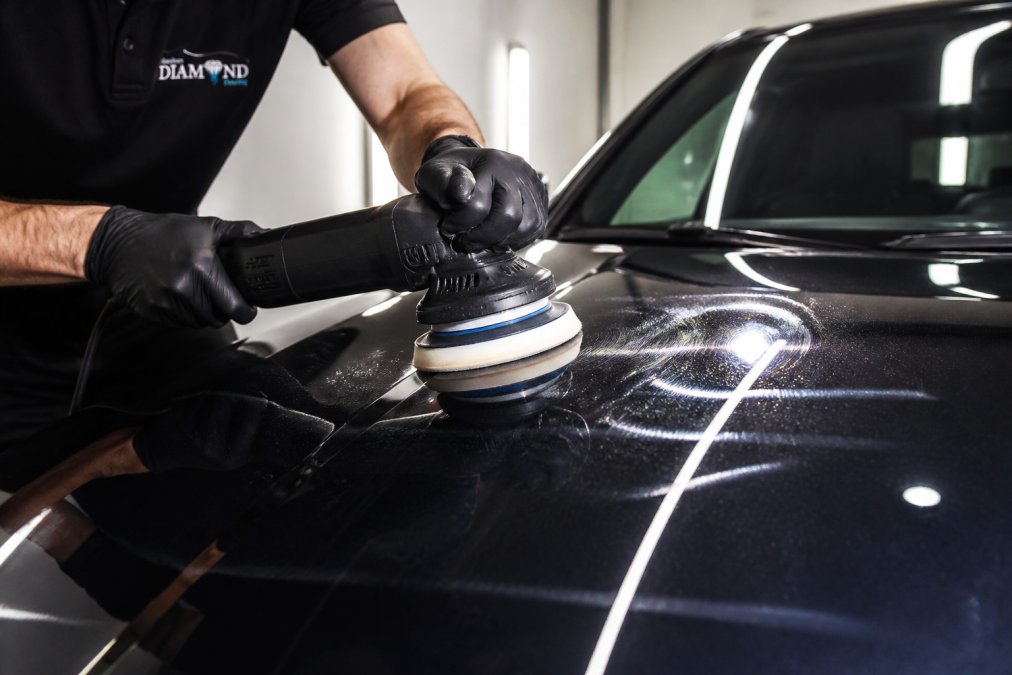
The process removes a controlled, microscopic amount of clear coat using abrasive compounds and machine polishers. Each stage uses progressively finer products until the surface is smooth, clear, and ready for protection. This requires both the right equipment and genuine experience with paint depth measurement to avoid cutting through the clear coat.
Single-Stage Polish
A single-stage polish uses one combination product that cuts and refines in a single pass. It suits paint with light swirl marks, minor water spots, or a dull finish that has lost clarity. This is the most common treatment for well-maintained vehicles showing fine surface marring from regular washing.
Single-stage correction typically removes 50-70% of light surface defects, often sufficient before ceramic coating on vehicles in good overall condition. It is not appropriate for deeper scratches or heavy oxidation.
Two-Stage Correction
Two-stage correction uses a heavier cutting compound first to remove significant defects, followed by a finer finishing polish to refine the surface and maximise gloss. This suits paint with moderate swirl marks, light scratches, and uneven finish.
The cutting stage removes defects; the finishing stage brings the surface to the clarity needed before coating. Skipping the second stage leaves a hazy finish, a common mistake by inexperienced operators.
Three-Stage or Full Correction
Three-stage or full correction is reserved for paint with heavy defects: deep scratches, severe swirl marks, oxidation, or poorly polished paint carrying compounding marks. It involves a heavy cut, medium refinement stage, and final finishing polish.
This work is time-intensive and demands careful paint depth measurement throughout to ensure the clear coat is not compromised. For prestige and performance vehicles, full correction before ceramic coating often restores paint to a condition that justifies a premium protective layer.
Stage | Best For | Defects Addressed |
|---|---|---|
Single-stage polish | Light swirls, minor dullness | Fine marring, water spots |
Two-stage correction | Moderate swirls, light scratches | Swirl marks, light scratches, uneven finish |
Three-stage / full correction | Heavy defects, oxidation | Deep scratches, heavy swirling, compounding marks |
Paint Correction vs Ceramic Coating for New Cars
Most new vehicles leave the factory with acceptable paint, not perfect paint. Transport scratches, dealer preparation marks, and forecourt exposure can introduce light defects before the car reaches its first owner. Modern paintwork is also thinner than previous decades, making both defects and correction more consequential.
According to guidance from the UK Detailing Association on new car paint preparation, even showroom-quality finishes frequently show swirl marks under inspection lighting. The question is whether those defects warrant correction before coating.
For a genuinely new car with minimal defects, a single-stage machine polish often suffices to refine the surface before ceramic coating, removing light marring from manufacturing and delivery without requiring full multi-stage correction.
The bigger risk with new cars is applying ceramic coating over dealer-applied sealants or waxes. These must be removed completely before coating. Professional decontamination, including clay bar treatment and chemical decontamination, is always necessary regardless of how new the vehicle is.
For prestige or performance vehicle owners, investing in at least single-stage correction on a new car before ceramic coating is worthwhile. The alternative, coating over minor defects, means living with those defects for the coating’s lifetime, which on quality professional applications can be several years.
Scenarios Where Paint Correction Is and Is Not Needed
When Correction Is Essential Before Coating
Heavy swirl marks and scratches visible in direct light. If paintwork shows a spider-web pattern of fine scratches under sunlight or artificial lighting, coating without correction will amplify this visibility. The coating’s gloss amplifies what is underneath.
Oxidation or faded paint. Oxidised paint has a chalky, dull appearance from UV degradation. A ceramic coating applied over oxidised paint will not restore gloss and will not bond properly to a compromised surface.
Previous poor polishing work. Incorrectly machine-polished vehicles may carry compounding marks, holograms, or buffer trails that must be corrected before coating.
Paint neglected for several years. Extended periods without proper care typically result in accumulated contamination and surface defects requiring correction. As noted by the Detailing World technical forum on paint preparation, attempting to coat over heavily contaminated or defect-laden paint is one of the most common reasons ceramic coatings underperform.
When You Can Proceed Without Full Correction
A vehicle with genuinely excellent paint condition. If paintwork is free of visible defects under inspection lighting, thorough decontamination and surface preparation suffice before coating. This is rare but does occur with carefully maintained vehicles.
A vehicle that will receive paint protection film. If PPF is applied to high-impact areas, the film itself provides physical protection and ceramic coating is applied over it. Preparation requirements differ from coating directly to bare paint.
Budget constraints. Prioritise decontamination and professional coating application over rushed or partial correction. A coating on clean, lightly marked paint is still a significant improvement over unprotected paint.
What to Expect From a Professional Paint Correction Service
A professional paint correction service is a structured, multi-step process taking considerably longer than most clients anticipate. Understanding what is involved sets realistic expectations and explains the service cost.
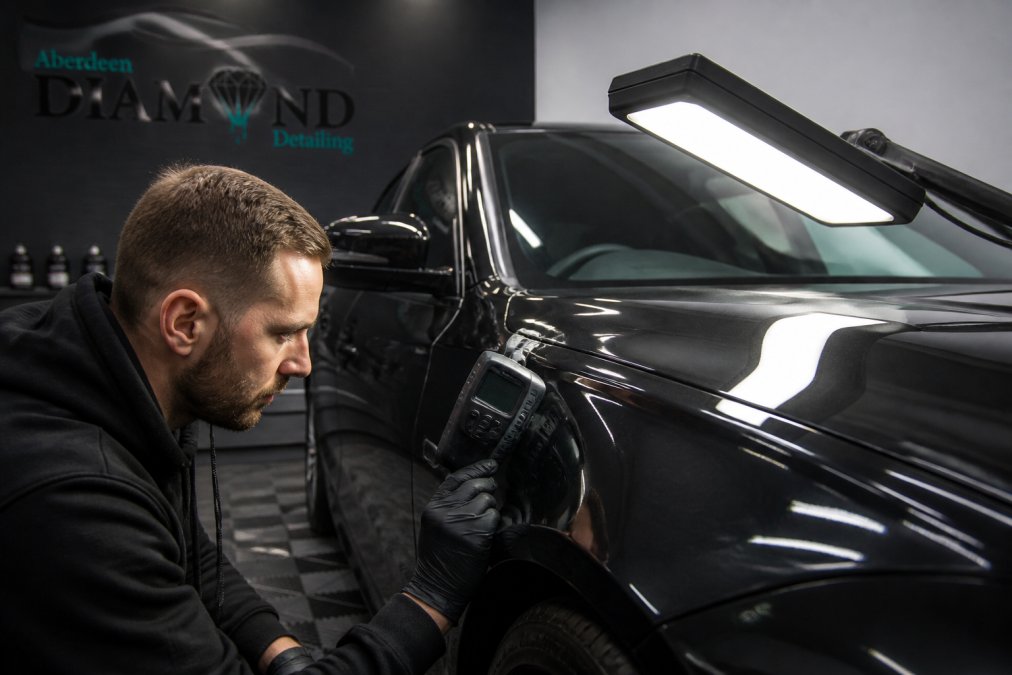
The process begins with thorough wash and decontamination: chemical pre-wash, hand wash using the two-bucket method, clay bar treatment to remove bonded contamination, and final inspection under LED lighting. Only once the surface is fully clean can defect extent be properly assessed.
Paint depth readings are taken across all panels before machine polishing begins. This is essential for understanding available clear coat and protecting paint from aggressive cutting. Skipping this step is a red flag.
Machine polishing proceeds panel by panel, with operators selecting appropriate pad and compound combinations for each area. Progress is checked regularly under inspection lighting. The work is methodical; rushing is where most correction errors occur.
After polishing, paint is wiped with an IPA solution to remove polishing oils, which would otherwise prevent ceramic coating from bonding correctly. The vehicle is then moved to a clean, dust-free environment for coating application.
Full correction and ceramic coating on a prestige vehicle typically takes one to three days depending on vehicle size, defect extent, and coating system. Single-stage correction and coating on vehicles in good condition may be completed in one day.
How Much Does Paint Correction Cost?
Paint correction cost varies considerably depending on correction stage required, vehicle size, and paintwork condition. Pricing reflects time involved: full three-stage correction on a large prestige vehicle differs significantly from single-stage polish on a compact car.
Paint correction is priced by work level required rather than flat rate. Thorough inspection before quoting is standard practice, as true defect extent often only becomes clear once the vehicle is cleaned and examined under inspection lighting.
For accurate pricing on paint correction and ceramic coating, contact Aberdeen Diamond Detailing directly for assessment. Any provider offering fixed prices without seeing the car first is worth treating with caution.
The cost of correction is an investment in coating longevity. A ceramic coating applied to properly corrected paint performs better, looks better, and lasts longer than one applied to compromised surface. For many vehicles, correction is the foundation that makes coating worthwhile.
For general guidance on professional detailing services and evaluating providers, Which? consumer guidance on car detailing services provides useful independent overview.
Common Mistakes When Skipping Paint Correction Before Ceramic Coating
The most consequential mistake in ceramic coating is also the most avoidable. Skipping or cutting short paint correction creates problems that cannot be fixed without removing the coating entirely, a laborious and costly process.
Sealing in defects permanently. Once ceramic coating cures, defects beneath are locked in. The coating’s hardness makes them more difficult to address than on bare paint.
Expecting the coating to fill scratches. Ceramic coatings do not fill scratches. Professional-grade coatings are protective layers, not fillers.
Skipping decontamination and going straight to correction. Polishing contaminated surfaces grinds contamination into paint rather than removing it. Decontamination must precede correction.
Under-correcting and coating over the result. Paint looks better than before but still carries defects visible under certain lighting. This is common when correction is rushed to reduce cost.
Coating over surfaces with polishing oils. Polishing compounds contain oils that must be removed with IPA wipe-down before coating. Coating over residual oils prevents proper chemical bonding and significantly reduces durability.
As Autoglym’s technical guidance on paint preparation notes, surface preparation is the single most important factor in any paint protection product’s performance. The coating is only as good as the surface it is applied to.
The challenge with paint correction is that consequences of getting it wrong are not always immediately obvious. A coating applied over minor defects may look acceptable initially, only to reveal flaws under direct sunlight weeks later. For prestige and performance vehicle owners investing in long-term protection, that outcome is unacceptable.
Aberdeen Diamond Detailing specialises in professional paint correction and ceramic coating for vehicles where the finish genuinely matters. Our approach begins with thorough paintwork assessment under inspection lighting, paint depth measurement before machine work, and clear recommendation on the correction level your vehicle requires. Contact us to discuss your vehicle and arrange an inspection.
Frequently Asked Questions
What happens if you apply ceramic coating without paint correction?
Ceramic coating locks in whatever condition the paint is in at the time of application. Any swirl marks, light scratches, or oxidation present on the surface will be sealed beneath the coating and made harder to address afterwards. Rather than hiding imperfections, the coating's gloss and reflective depth can actually make them more visible under direct light. Removing the coating to correct the paint later is a time-consuming and costly process, so it is far more efficient to correct the paint first.
Is paint correction worth it for a brand new car?
Yes, in most cases. New cars frequently arrive from the factory or dealership with swirl marks from automated wash equipment and handling during transport. A paint depth reading and inspection under a focused light source will reveal whether the surface is truly flawless. Even minor swirling on a new car will be sealed in permanently if you apply ceramic coating straight away. A light single-stage polish is often all that is needed, and the investment is small relative to the cost of the coating itself.
Does ceramic coating hide scratches or swirl marks?
No. Ceramic coating adds a hard, transparent layer over the paint but does not fill or mask scratches and swirl marks. If anything, the high-gloss finish that a quality coating produces makes surface defects easier to see, particularly under artificial lighting or direct sunlight. Paint correction removes those defects before the coating is applied, so the finished result is a genuinely flawless surface rather than a shiny one with visible imperfections trapped underneath.
Can I do paint correction myself or should I hire a professional?
Single-stage polishing with a dual-action machine polisher is achievable for a careful and experienced home detailer, but two- and three-stage correction carries real risk of burning through the clear coat if the technique is wrong. A professional will measure paint depth with a gauge before and during the process to ensure safe material removal. For a prestige or performance vehicle where the paint is already thin, or where the finish needs to be perfect before ceramic coating, professional correction is strongly recommended.