
Table of Contents
- How Paint Protection Film Protects Against Rock Chips
- Types of Damage PPF Can Prevent
- PPF vs Ceramic Coating for Stone Chips
- How Long Does PPF Last Against Impact Damage?
- Does PPF Affect Car Resale Value?
- The Limitations of PPF Protection
- Maintaining Your PPF for Maximum Protection
- Frequently Asked Questions
Last Updated: 25 September 2026
How Paint Protection Film Protects Against Rock Chips
Paint protection film works as a transparent barrier between your car’s paint and the road. When a rock hits your vehicle, the PPF absorbs the impact rather than allowing it to damage the underlying clear coat and paint layers. The film is engineered to be flexible and self-healing, meaning minor scratches and swirls often disappear on their own as the material responds to heat.
Does PPF protect against rock chips? Yes. PPF is specifically designed to shield against rock chips, one of the most common forms of paint damage on vehicles. The film sits on top of your paint and takes the hit so your finish doesn’t have to.
The technology behind PPF involves a multi-layered construction. The top layer is a sacrificial urethane coating that absorbs impacts. Below that sits a thick adhesive layer that bonds to your paint, and underneath is a clear polyurethane base that provides structural integrity. When a stone strikes the surface, the film deforms slightly, distributes the force across a wider area, and prevents the concentrated impact from reaching your paint.
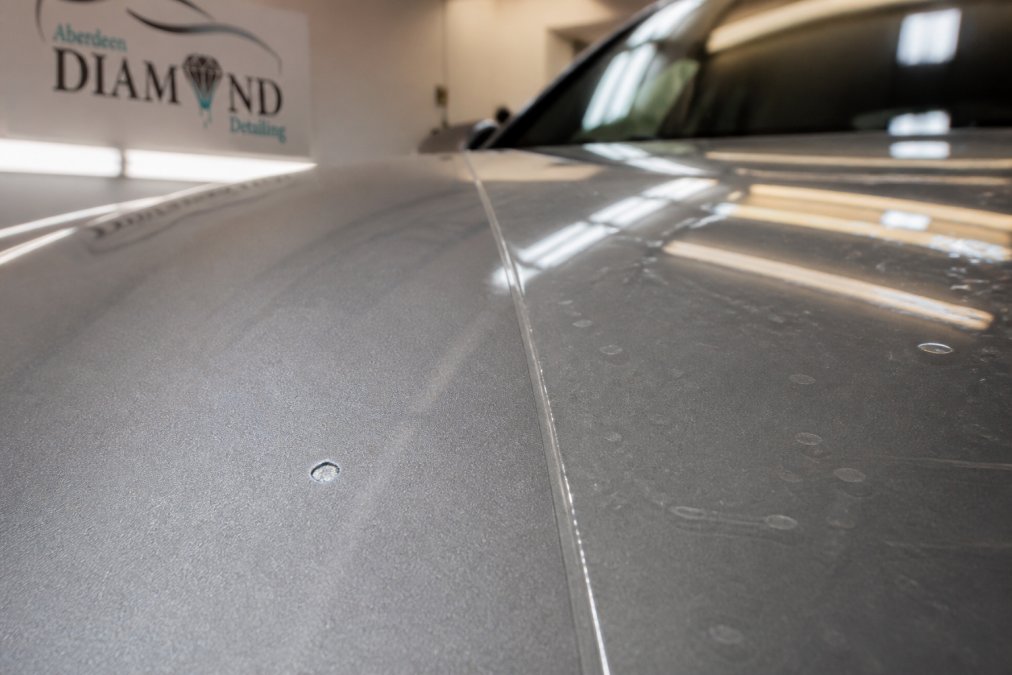
The film essentially sacrifices itself to preserve your paint underneath, that’s precisely what it’s engineered to do.
One thing worth understanding: PPF won’t prevent every possible scratch or mark, but it prevents the ones that matter most. A rock chip that would have damaged your paint permanently becomes a minor mark on the film that either disappears with heat or remains invisible beneath the clear protective layer.
Types of Damage PPF Can Prevent
Paint protection film guards against several categories of road damage. Rock chips are the primary concern, but PPF also protects against road tar, bird droppings, tree sap, and minor abrasions from washing. The film’s self-healing properties mean light scratches from washing mitts or microfibre cloths often disappear without intervention.
PPF excels at preventing damage from gravel kicked up by other vehicles, particularly on motorways. Larger stones that would leave noticeable chips in unprotected paint either bounce off the film or leave marks that fade with heat. The film is also effective against salt spray and chemical residue from road treatments, it acts as a barrier that prevents these corrosive substances from reaching your paint.
Minor impact damage is another area where PPF performs well. Small collisions with bollards, parking barriers, or other vehicles often leave marks on the film rather than damaging the paint beneath. The damage is contained to a replaceable material instead of your permanent finish.
However, PPF has limits. Severe impacts, such as a significant collision or a large object striking at high speed, can damage the film itself. Deep gouges or punctures may require patch repairs or full panel replacement. PPF also won’t prevent swirl marks from improper washing technique or prevent oxidation if the film is damaged and water reaches the paint underneath.
PPF vs Ceramic Coating for Stone Chips
Ceramic coating and PPF serve different purposes, though many vehicle owners use both together. Ceramic coating is a liquid polymer that bonds chemically to your paint, creating a hydrophobic surface. It protects against UV damage, chemical etching, and water spots, but it does not protect against physical impact or rock chips.
Does PPF protect against rock chips better than ceramic coating? Absolutely. Ceramic coating cannot prevent rock chips because it’s not a physical barrier, it’s a chemical layer measured in microns. A stone impact goes right through it. PPF, by contrast, is a thick film (typically 150-200 microns) that physically blocks impact damage.
The ideal approach combines both. PPF handles impact protection, while ceramic coating sits on top of the film and provides additional protection against environmental contaminants, UV rays, and water spotting. This layered defence is what professional detailers recommend for high-value vehicles.
Ceramic coating alone might extend the life of your paint slightly by protecting against chemical damage, but it won’t stop a single rock chip. PPF alone, without ceramic coating, still protects against chips but leaves the film itself vulnerable to UV degradation and water spotting over time. Together, they create a comprehensive protection system.
Cost considerations differ significantly. Ceramic coating is considerably less expensive than PPF and easier to apply. However, it requires reapplication every two to three years. PPF is a larger investment upfront but lasts significantly longer and directly prevents the damage that ceramic coating cannot.
How Long Does PPF Last Against Impact Damage?
Quality paint protection film typically lasts between five and ten years, depending on environmental conditions, maintenance, and the specific product used.
The film’s ability to prevent rock chips doesn’t diminish significantly during this period. What changes over time is the film’s appearance and self-healing capability. After several years, the film may yellow slightly, particularly on sections exposed to intense sunlight. The self-healing properties also diminish as the material ages, meaning minor scratches are less likely to disappear on their own.
Impact protection remains functional throughout the film’s lifespan. Even a seven-year-old PPF will still prevent rock chips far more effectively than unprotected paint. The film becomes less effective at self-healing minor marks, but the core function, absorbing impacts, remains intact.
Maintenance significantly affects longevity. PPF exposed to regular washing, proper care, and protection from harsh chemicals lasts longer than film that’s neglected. Ceramic coating applied over the film extends its lifespan by protecting the film itself from UV degradation and environmental damage.
Does PPF Affect Car Resale Value?
Paint protection film can positively influence resale value, particularly for prestige and performance vehicles where paint condition is a significant factor in buyer assessment. A well-maintained car with original paint in excellent condition typically commands a higher price than one with visible chips, scratches, and repairs.
PPF preserves that original paint condition. When potential buyers inspect a vehicle, they’re looking at the actual factory paint rather than a surface covered in stone damage. This perception of care and attention significantly impacts their willingness to pay.
However, the resale value benefit depends on the quality of the PPF installation and its condition at the time of sale. If the PPF itself is yellowed, peeling, or damaged, it can actually reduce perceived value because buyers worry about what damage lies beneath. A well-maintained film that’s virtually invisible adds value; a deteriorated film suggests neglect.
The market for high-end vehicles recognises the investment in protection. Buyers of prestige cars expect meticulous care, and evidence of PPF protection, when done professionally, demonstrates that care. Conversely, a vehicle with visible rock chips and paint damage suggests the owner didn’t invest in protection, which raises questions about overall maintenance.
For standard vehicles, the resale value impact is less pronounced. The cost of PPF application may not be fully recovered in the resale price. However, the preserved paint condition still matters to buyers, and a chip-free finish always sells better than a damaged one.
The Limitations of PPF Protection
Understanding what PPF cannot do is as important as knowing what it can. The film is not invisible, quality installations are nearly undetectable, but very close inspection or certain lighting angles can reveal the edges where the film ends. This is particularly noticeable on bonnet edges and around headlights.
PPF cannot protect against all forms of damage. Deep gouges, punctures, or severe impacts can damage the film itself, requiring repair or replacement. Extreme temperature fluctuations can cause the film to separate from the paint if the adhesive fails. Chemical damage from harsh cleaning products or industrial fallout can degrade the film over time.
The film also requires proper installation. Poor application results in trapped air bubbles, uneven coverage, or premature peeling. This is why professional installation matters, a DIY approach or installation by inexperienced technicians often leads to disappointing results that undermine the film’s protective benefits.
Maintenance is essential. While PPF is durable, it still requires regular washing and care. Abrasive washing techniques, harsh chemicals, or neglect can damage the film. Ceramic coating helps, but even with coating, the film needs attention to maintain its appearance and function.
Cost is another practical limitation. Quality PPF installation for a full vehicle represents a significant investment. Partial coverage, such as front bumper and bonnet only, reduces cost but leaves other vulnerable areas unprotected. Many vehicle owners choose this compromise, accepting that only the highest-impact areas receive protection.
Maintaining Your PPF for Maximum Protection
Proper maintenance ensures your PPF delivers protection for years without deterioration. The fundamentals are straightforward: gentle washing, appropriate products, and regular inspection.
Wash your vehicle every two weeks using a pH-neutral car shampoo and soft microfibre wash mitts. Avoid automated car washes with harsh brushes, which can scratch the film and cause premature wear. Hand washing with proper technique, rinsing first, using the two-bucket method, drying with soft towels, protects both the film and any underlying paint.
Avoid abrasive cleaning products.
Frequently Asked Questions
Can PPF prevent all types of stone chips?
PPF protects against most common rock chips and road debris impacts, but extremely high-velocity strikes or repeated impacts in the same area can overwhelm the film’s protective capacity. The self-healing properties of modern PPF mean minor chips and swirl marks often disappear on their own, but deep gouges that penetrate the full film thickness may require repair or replacement of that section. PPF works best as preventative protection rather than armour against catastrophic damage.
How does PPF compare to ceramic coating for stone chip protection?
PPF and ceramic coating serve different purposes. PPF is a physical barrier that absorbs impact energy and prevents chips from reaching the paint underneath, whilst ceramic coating is a hardened layer that resists scratches and chemical damage but offers no impact protection. Many vehicle owners use both together: PPF on high-impact areas like the bonnet, bumper, and wing mirrors, with ceramic coating applied over the PPF and remaining paintwork for comprehensive protection and shine.
Does PPF affect car resale value?
PPF typically enhances resale value by preserving the original paint condition, which buyers value highly. A well-maintained PPF-protected car with flawless paintwork commands a premium compared to one showing chips and swirl marks. However, resale value depends on the quality of installation, the film’s condition at sale, and whether buyers perceive it as a benefit. Professional installation and transparent documentation of the PPF application strengthen its positive impact on value.
How long does PPF last against rock chip damage?
Quality PPF typically lasts for many years, with self-healing properties remaining effective throughout. The film’s protective capability against rock chips doesn’t degrade significantly during this period, though environmental exposure and UV light can gradually reduce flexibility and clarity. Proper maintenance, including regular washing and avoiding harsh chemicals, extends both the lifespan and the film’s protective performance.