
Table of Contents
- Why Scottish Weather Demands Paint Protection
- Paint Protection Film Benefits and Application
- Understanding Ceramic Coating Cost and Value
- How to Remove Road Salt from Car Paint
- Preparation: Getting Your Paint Ready for Protection
- Application and Maintenance: Keeping Protection Effective
- Common Mistakes to Avoid When Protecting Your Paintwork
- Frequently Asked Questions
Last Updated: September 3, 2026
Why Scottish Weather Demands Paint Protection
Scottish weather is relentless on car paint. Rain, salt spray, UV exposure, and temperature swings create a perfect storm of damage. Your vehicle’s finish isn’t just about aesthetics, it’s about protecting your investment from the elements that actively work against it.
The challenge is that standard washing and waxing won’t cut it. When you’re facing months of damp conditions, coastal salt air, and intense UV when the sun does break through, your paint needs serious defence. This is where understanding the specific threats becomes essential to choosing the right protection strategy.
Aberdeen Diamond Detailing has worked with countless vehicle owners facing these exact conditions. The difference between a car that looks showroom-fresh after five years and one that shows significant fade and deterioration comes down to one thing: what protection you apply and how well you maintain it.
Road salt is perhaps the single biggest threat (the CDC). It corrodes paint, accelerates oxidation, and can lead to permanent damage if left untreated. Combined with the moisture that comes with the territory, this creates an environment where unprotected paintwork deteriorates noticeably within months rather than years. The good news is that with the right approach to protecting car paint in Scottish weather, you can keep your vehicle looking pristine.
Start protection early. The best time to apply paint protection is before your car faces its [first harsh winter](/preparing-your-car-for-winter-how-professional-detailing-can-keep-your-car-protected/). Once damage begins, correction becomes necessary before protection can be truly effective.
Paint Protection Film Benefits and Application
Paint protection film (PPF) is a transparent, self-healing thermoplastic urethane layer applied directly to your car’s paint. It acts as a physical barrier between your paint and the elements, road salt, grit, UV rays, and minor impacts all hit the film first, not your paint.
The benefits for Scottish conditions are significant. PPF prevents stone chips, swirl marks from washing, and acid rain damage. It’s particularly valuable on high-impact areas: the bonnet, front bumper, door handles, and mirror backs. In Scottish weather, where road salt and grit are constantly airborne, these areas take a beating.
Application requires professional expertise. The film must be cut precisely to fit your vehicle’s contours, applied with specialist adhesive, and sealed properly to prevent water ingress. A poor installation will trap moisture underneath, causing the film to peel or discolour. This is why working with experienced professionals matters, they understand how to account for temperature and humidity during application.
The self-healing property is particularly useful. Minor scratches and swirl marks on the film’s surface disappear when warmed by sunlight or hot water. This means your paint stays protected even when the film itself shows signs of wear. However, deep gouges or major damage to the film itself won’t self-heal and will require replacement of that section.
Durability typically ranges from five to ten years depending on the film quality and maintenance (peer-reviewed research). Higher-grade films last longer and resist yellowing better. The investment is substantial, but the protection it provides to your paint, and therefore your vehicle’s value, justifies the cost for owners serious about preservation.
Understanding Ceramic Coating Cost and Value
Ceramic coatings create a hydrophobic layer on top of your paint. They’re not a physical barrier like PPF, but rather a chemical bond that makes water bead and roll off, reducing the time contaminants sit on your paint’s surface. In Scottish weather, this constant shedding of water is genuinely valuable.
The ceramic coating cost varies depending on the product grade and the size of your vehicle, but the investment typically delivers value through reduced maintenance. Water spots are minimised, road salt rinses away more easily, and your paint stays cleaner between washes. This matters when you’re dealing with frequent rain and salt spray.
Application involves thorough paint preparation, often including paint correction if swirl marks or oxidation are present. The coating is then applied in thin layers and cured. Professional-grade ceramic coatings require specialist knowledge to apply correctly. Poor application results in uneven coverage, streaking, or premature failure.
The hydrophobic effect makes a tangible difference. You’ll notice water beading dramatically on your paint, which means contaminants spend less time bonded to the surface. In practice, this translates to easier cleaning and longer periods between washes. For owners in high-rainfall areas, this is a genuine quality-of-life improvement.
Durability depends on the product and maintenance. Many ceramic coatings last two to three years before needing reapplication (peer-reviewed research). Some premium products claim longer durability, but results vary based on exposure and care. The key is understanding that ceramic coating is not a one-time solution, it requires periodic maintenance and reapplication.
Ceramic coatings work best when combined with proper washing technique. Improper washing can damage the coating, so understanding how to maintain it is as important as the initial application.
How to Remove Road Salt from Car Paint
Road salt is corrosive and will damage your paint if allowed to sit. The challenge in Scottish weather is that salt exposure is constant, especially during winter months when gritting is heaviest. Removing it properly prevents long-term damage.
The first step is rinsing thoroughly with clean water. A pressure washer works well, but use it carefully, too much pressure can damage paint or push water into seals. Focus on the lower panels, wheel arches, and undercarriage where salt accumulates most heavily. Pay particular attention to crevices and panel gaps where salt and grit lodge.
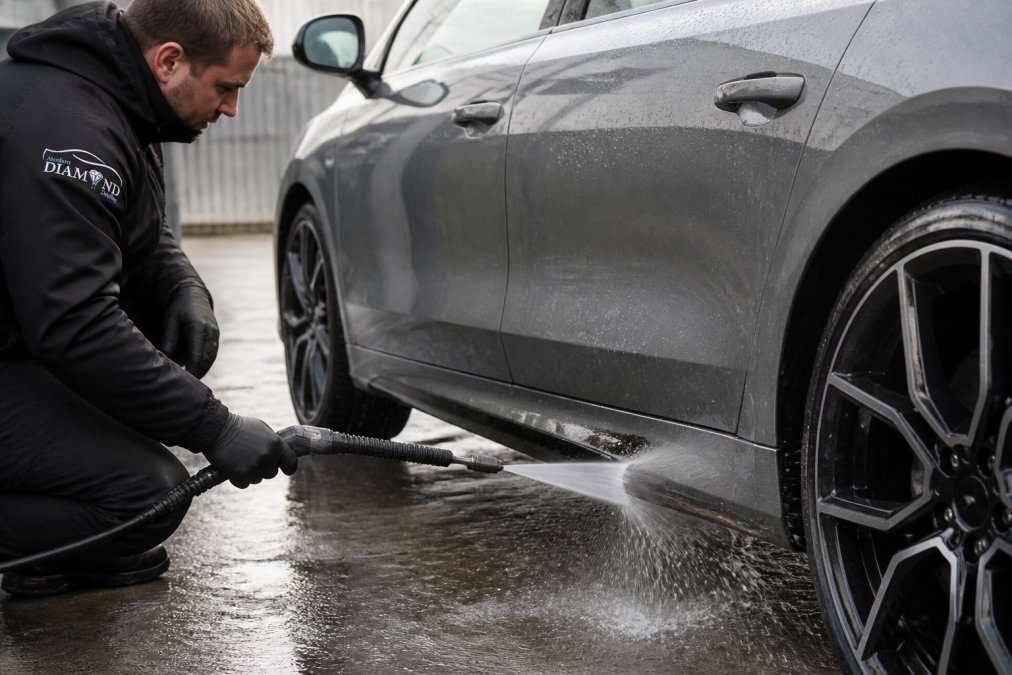
After rinsing, wash your vehicle with a pH-neutral car shampoo. This removes remaining salt residue and any bonded contaminants. Use the two-bucket method, one for soapy water, one for rinsing your wash mitt. This prevents dragging grit across your paint and creating swirl marks.
For stubborn salt deposits, a clay bar treatment works effectively. The clay gently removes bonded contaminants from the paint surface without damaging it. Work in small sections, using a lubricant spray to help the clay glide smoothly. This step is particularly important if you’ve left salt exposure untreated for an extended period.
Drying is crucial. Use a microfibre drying towel rather than letting your car air-dry. Water spotting is less of a concern than the damage that can occur if water is left to sit on salt-affected paint. Microfibre towels absorb water quickly without scratching.
The frequency of salt removal depends on exposure. During winter months with heavy gritting, a weekly rinse is sensible. In milder months, every two weeks is usually sufficient. The goal is preventing salt from bonding to your paint, which happens within hours of exposure.
Preparation: Getting Your Paint Ready for Protection
Before applying any protection, whether PPF, ceramic coating, or both, your paint must be properly prepared. This is where many DIY approaches fail. Applying protection over swirl marks, oxidation, or contamination locks those imperfections in place.
Paint assessment comes first. Examine your paint in bright sunlight, looking for swirl marks, fine scratches, water spots, and oxidation. These are all visible signs that preparation is needed. Even new cars often have minor swirl marks from the dealer’s washing process.
Paint correction removes these imperfections. This involves machine polishing with progressively finer compounds and pads to level the paint surface. It’s not a quick process, depending on the condition of your paint, it can take hours or even days. This is skilled work that requires experience to avoid over-correcting or creating new damage.
Decontamination removes embedded particles. A clay bar treatment lifts bonded contaminants like industrial fallout, tree sap, and brake dust. Chemical decontaminants can remove iron particles and other stubborn deposits. These steps are essential because any particles left on the surface will be trapped under your protection, creating permanent marks.
Surface preparation immediately before application is equally critical. The paint must be cleaned with an isopropyl alcohol solution to remove any oils, waxes, or residue. This ensures the protection bonds properly to the paint surface. Humidity and temperature must be within specific ranges during application, too cold or too humid and the adhesive won’t cure correctly.
This preparation phase is where Aberdeen Diamond Detailing’s expertise becomes apparent. Rushing or cutting corners on preparation will result in protection that doesn’t adhere properly or that traps imperfections. The investment in thorough preparation pays dividends in the longevity and effectiveness of your protection.
Never apply protection over contaminated or damaged paint. If you skip proper preparation, you’re paying for protection that won’t perform as intended and may trap damage that becomes permanent.
Application and Maintenance: Keeping Protection Effective
Professional application of PPF or ceramic coating requires controlled conditions. Temperature should be between 15-25°C, humidity below 85%, and the work area must be dust-free. These aren’t arbitrary requirements, they’re essential for proper adhesion and curing.
PPF application involves cutting the film to precise measurements for each panel, then carefully positioning and adhering it to the paint. The installer uses a slip solution to position the film, then works out air bubbles and excess solution. The film then cures over 24-48 hours. During this period, your vehicle shouldn’t be washed or driven in heavy rain.
Ceramic coating application is faster but equally precise. The coating is applied in thin, even layers using specialist applicators. Each layer must cure before the next is applied. The final cured coating takes several days to fully harden, during which exposure to water should be minimised.
Maintenance determines how long your protection lasts. For PPF, washing is straightforward, treat it like regular paint. Avoid clay bars or aggressive polishing, as these can damage the film. For ceramic coatings, use only pH-neutral wash products and avoid automatic car washes with brushes, which can degrade the coating.
Water beading indicates your ceramic coating is still performing. When beading diminishes noticeably, reapplication is needed. This typically happens every two to three years, depending on the product and exposure. Regular maintenance washes help extend this interval.
Avoid parking under trees during autumn and winter. Tree sap, bird droppings, and falling leaves all bond to your paint and protection. Regular removal prevents these from causing permanent marks. Similarly, park away from industrial areas where fallout can accumulate.
Common Mistakes to Avoid When Protecting Your Paintwork
The most common mistake is applying protection to unprepared paint. Owners often want to skip the paint correction stage to save money, but this locks in swirl marks and oxidation. You’re then paying for protection that sits over imperfections you’ll always see.
Another frequent error is poor maintenance after application. Ceramic coatings require specific washing techniques. Using the wrong soap, washing in direct sunlight, or using brushes and sponges can all damage the coating prematurely. The protection only works if you maintain it correctly.
Underestimating Scottish weather’s impact is common. Owners sometimes apply basic protection and assume it’s sufficient. Road salt, constant moisture, and UV exposure are more aggressive than many realise. Half-measures result in protection that fails sooner than expected, leaving you with unprotected paint and wasted investment.
Choosing budget protection options often backfires. Cheap ceramic coatings might last only six months before failing. Cheap PPF yellows and peels within a couple of years. The initial savings disappear when you need to reapply or correct damage that cheap protection didn’t prevent.
Ignoring early warning signs is another pitfall. If your ceramic coating stops beading water, that’s a signal to reapply before your paint loses protection. If PPF begins to peel at the edges, address it immediately before water gets underneath. Small maintenance catches major problems before they develop.
Not protecting high-impact areas is surprisingly common. Owners apply PPF to the bonnet but skip the front bumper, where stone chips are most likely. They coat the entire car but neglect the door handles, which face constant contact and weathering. Strategic protection of vulnerable areas is often more effective than thin protection everywhere.
Finally, attempting DIY ceramic coating application frequently fails. The product requires precise application conditions, proper technique, and experience to avoid streaking or uneven coverage. Professional application costs more upfront but delivers results that justify the investment. This is where working with experienced professionals like Aberdeen Diamond Detailing makes a measurable difference.
Document your paint’s condition before applying protection. Take photographs in good lighting. If issues develop later, you’ll have clear evidence of what protection prevented.
Protecting your car’s paint in Scottish weather isn’t optional if you want to maintain its appearance and value. The combination of salt spray, moisture, and UV exposure creates conditions that quickly degrade unprotected paint. Paint protection film and ceramic coatings, properly applied and maintained, keep your vehicle looking showroom-fresh despite the challenging climate. Aberdeen Diamond Detailing specialises in precise PPF application, professional ceramic coating, and paint correction, the three services that work together to deliver lasting protection. Get in touch to discuss which protection strategy suits your vehicle and driving habits, and start preserving your investment today.
Frequently Asked Questions
Is ceramic coating worth it for cars in wet climates?
Ceramic coatings provide excellent water beading and reduced water spotting in wet conditions, making them valuable for Scottish weather. They create a hydrophobic layer that sheds moisture and reduces salt adhesion. However, ceramic coatings require proper maintenance, regular washing and occasional top-ups, to maintain effectiveness. The investment pays dividends when combined with proper paint correction beforehand, ensuring the coating bonds to a clean, smooth surface rather than sealing in swirl marks or contaminants.
How does salt and grit affect car paintwork?
Salt accelerates corrosion by breaking down the clear coat and exposing bare metal, whilst grit particles embed themselves in the paint and create micro-scratches. Both types of damage intensify in wet conditions as salt dissolves and penetrates deeper. The damage compounds over months, minor scratches become rust spots, and corrosion spreads beneath the surface. Regular rinsing, especially after exposure to salted roads, removes these contaminants before they cause permanent etching. Paint protection methods like ceramic coatings and PPF create a sacrificial barrier that takes the damage instead of your original paint.
What is the best way to prevent paint oxidation in high-moisture areas?
Prevent oxidation by creating a protective barrier before it starts. Paint protection film and ceramic coatings both shield the clear coat from moisture and UV exposure. Between professional applications, wash your car regularly with a pH-neutral shampoo to remove salt and contaminants, then dry thoroughly to prevent water spotting. Store your vehicle in a garage when possible, even a covered carport reduces exposure to rain and salt spray. Avoid washing immediately before or during rain, as water can trap contaminants against the paint.
How often should I wash my car to prevent corrosion in Scottish weather?
Wash your car every two weeks during winter months when salt use on roads is highest, and every three to four weeks during other seasons. After driving on salted roads or in coastal areas, rinse the undercarriage and lower panels within 24 hours to remove salt before it corrodes metal components. Use a two-bucket wash method with a grit guard to avoid dragging contaminants across the paint. If you’ve applied ceramic coating or PPF, washing frequency can reduce slightly as the protection layer takes the initial exposure, but regular maintenance still matters for longevity.