
Table of Contents
- How Road Salt Attacks Your Car Paint
- How Road Salt Attacks Your Car Paint
- Signs of Salt Damage on Car Bodywork
- How to Remove Road Salt from Car Surfaces
- How Often to Wash Car in Winter
- Ceramic Coating for Winter Protection
- Prevention: Protecting Your Paint Before Salt Hits
- Conclusion
- Frequently Asked Questions
Last Updated: September 18, 2026
How Road Salt Attacks Your Car Paint
Does road salt damage car paint permanently? Yes, it can, but only if the salt sits on your panels for weeks or months without being washed off. Road salt damage is the corrosion and staining that happens when chloride-heavy grit brine bonds to your clear coat and eats into it over time. This guide explains how the damage works, how to spot it, and how to stop it before it becomes permanent.
Salt is not just a winter nuisance. It is chemically aggressive. Once it dries on your paint, it pulls moisture from the air and keeps the surface wet, which is exactly the condition corrosion needs. The good news: caught early, almost all of it reverses.
How Road Salt Attacks Your Car Paint
Road salt attacks paint in two ways: physically, as grit thrown up by tyres, and chemically, as brine that works into every chip and seam.
The physical damage comes first. Loose grit and salt crystals strike your lower panels, sills and wheel arches at speed. Each strike leaves a tiny mark. Those marks are where the real trouble starts.
The chemical damage follows. Brine seeps into those marks, then into any stone chip or scratch already there. Left alone, it starts to lift the clear coat from the base layer beneath.
The Chemistry Behind Salt Damage
Salt speeds up the oxidation of metal. When chloride ions sit on a wet surface, they break down the protective oxide layer that would normally slow corrosion. That is why a salted panel rusts far faster than an unsalted one.
Your clear coat is the first line of defence. It is a thin, transparent layer over the colour coat. Salt does not dissolve it outright, but it dries it out, dulls it, and works its way into any break in the surface.
When Damage Becomes Permanent
Damage becomes permanent when salt reaches bare metal and rust takes hold. At that point, no wash will fix it. The panel needs sanding, priming and repainting.
Surface staining and dull patches are usually reversible with machine polishing. Rust bubbling under the paint is not. The line between the two is time, so the sooner you wash, the better your odds.
The biggest mistake is waiting for a dry weekend to wash. Salt keeps working while it sits there, wet or dry. A quick rinse at a jet wash today beats a full valet next month.
Signs of Salt Damage on Car Bodywork
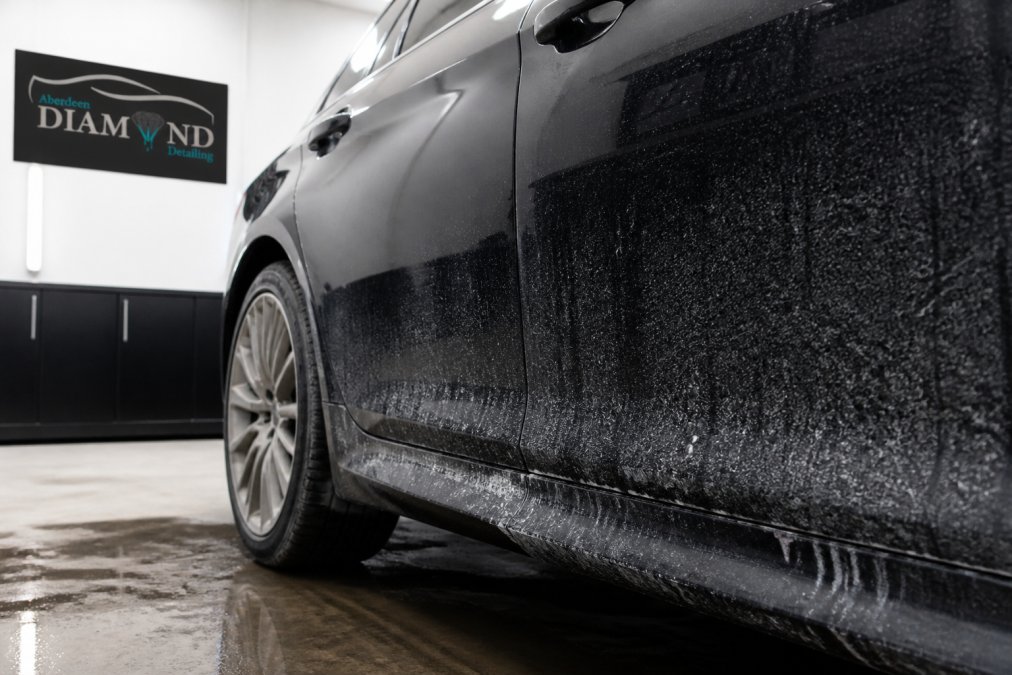
Look for a white, chalky film on lower panels, sills and wheel arches. That film is dried salt residue, and it is the earliest warning sign.
Other signs to check for:
- Dull or hazy patches that will not buff out by hand
- Small brown specks along the bottom of doors and arches
- Rough, gritty texture on the paint surface
- Bubbling or lifting at the edge of stone chips
- White bloom on alloy wheels and brake calipers
If you spot any of these, act quickly. A clay bar and a wash will lift most surface contamination. Brown specks that stay put after washing need professional attention.
How to Remove Road Salt from Car Surfaces
Removing road salt starts with a thorough rinse before you touch the paint. This is the single most important step, and most people skip it.
If you sponge a salty panel straight away, you drag grit across the clear coat and scratch it. Rinse first, always.
Step-by-Step Removal Process
- Rinse from the top down with a pressure washer to soften and lift the salt.
- Focus on the underside, sills, arches and behind the wheels, where salt collects most.
- Apply a pH-neutral snow foam and let it dwell for a few minutes.
- Wash with the two-bucket method and a soft microfibre mitt.
- Use a dedicated fallout remover on any brown specks.
- Clay the lower panels to pull out embedded contamination.
- Dry with a plush microfibre towel to avoid water spots.
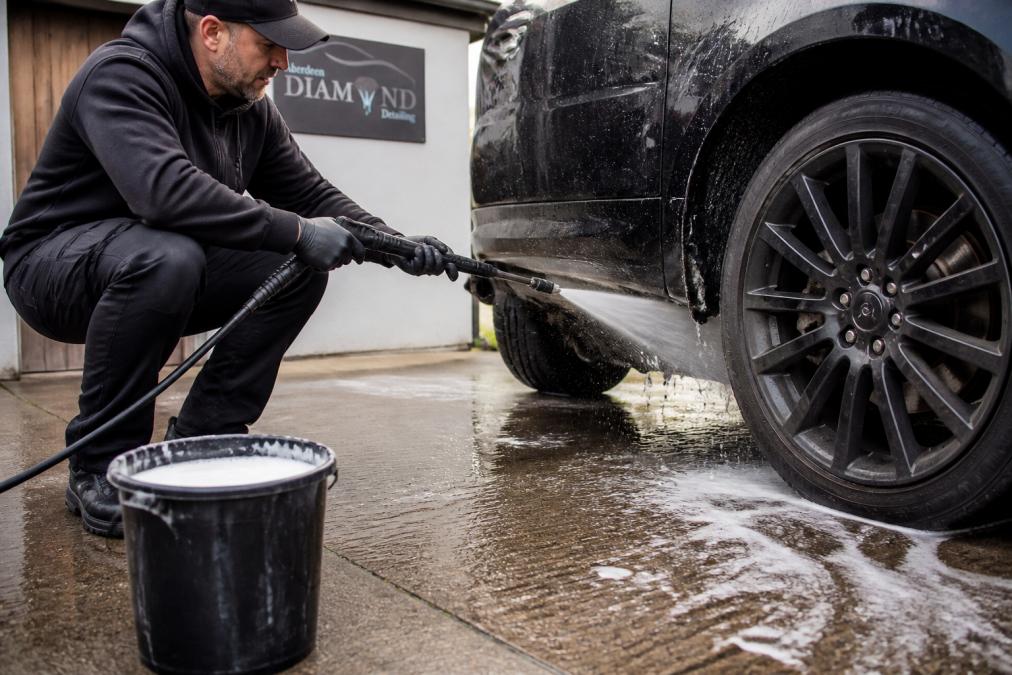
For stubborn staining, a light machine polish will restore gloss. If rust has already started, that is a paint correction job, not a wash.
How Often to Wash Car in Winter
Wash your car at least once every two weeks in winter, and weekly if you drive on salted routes daily. There is no single right answer, because it depends on how much salt your car meets.
A car parked in a garage and driven rarely needs less. A daily commuter on gritted roads needs more. The rule is simple: do not let salt sit for longer than a fortnight.
Pay extra attention after any long motorway run or after a cold snap when gritters have been out. Those are the days your paint takes the heaviest hit.
Ceramic Coating for Winter Protection
Ceramic coating for winter gives your paint a hard, slick layer that salt struggles to bond to. It does not make your car salt-proof, but it makes every wash easier and more effective.
The coating fills the tiny pores in your clear coat, so brine has fewer places to grip. Dirt and salt rinse away with far less effort. That means less rubbing, and less rubbing means fewer scratches.
A professional-grade coating can offer enhanced durability. If you have tried a shop-bought product and been disappointed, the difference is often in the preparation and the curing.
Prevention: Protecting Your Paint Before Salt Hits
The best defence is applied before the first gritter leaves the depot. Preparation beats reaction every time.
- Apply a quality sealant or ceramic coating in autumn
- Fit mud flaps to cut spray onto lower panels
- Keep a healthy layer of wax on exposed edges
- Rinse the underside after every salted drive
- Park under cover where you can
Paint protection film is the strongest option for high-impact areas like the front bumper, bonnet edge and sills. It takes the grit strikes so your paint does not have to.
What most guides miss is the wheel arch liner. Salt packs into the gap behind it and stays wet for days. A quick hose into that gap each wash prevents a rust problem you will not see until it is expensive.
Conclusion
Road salt damage is permanent only when it is ignored. Surface staining, dull patches and white bloom all come out with proper washing and polishing. Rust that has eaten into bare metal does not.
The formula is straightforward: rinse before you wash, wash every fortnight, and add a protective layer before winter arrives. Do those three things and your paint will come through the salt season intact. For owners who want that protection applied properly, a professional ceramic coating or paint protection film can be a reliable route to keeping a finish flawless year after year.
Frequently Asked Questions
How quickly does road salt damage car paint?
Road salt can begin attacking your paint within days if left unchecked. The salt crystals are abrasive and hygroscopic, drawing moisture to the surface and accelerating oxidation. In winter conditions, even a single journey on treated roads exposes your car to a fine layer of salt. Regular washing, ideally every 7-10 days, removes the salt before it can bond to the clear coat and cause permanent etching.
Can ceramic coatings prevent salt damage to car paint?
A professional ceramic coating creates a semi-permanent barrier that stops salt from contacting your paint directly. It also makes washing easier because salt and grime slide off with less effort. However, no coating is indestructible; you still need to wash regularly. A quality coating applied by a specialist can offer lasting protection and is an effective way to guard against winter salt damage.
Is it necessary to wash the underside of a car in winter?
Yes, the underside is where salt accumulates most and can lead to rust on brake lines, suspension components, and exhaust systems. Use a pressure washer with a lance attachment to rinse the undercarriage thoroughly. If you cannot do this at home, many car washes offer undercarriage cleaning. Neglecting this area can lead to expensive structural repairs, even if your paint stays pristine.
What are the signs of permanent salt damage?
Look for white or grey crusty deposits, dull patches that do not wash away, and tiny blisters or lifting in the clear coat. If you can feel a rough texture after washing, the salt has started to etch the surface. Once the clear coat is breached, the base coat can fade or peel. At that stage, only professional paint correction or respraying can restore the finish.