Table of Contents
- Paint Correction vs Polishing: Key Differences at a Glance
- Single Stage vs Multi Stage Paint Correction
- How Long Does Paint Correction Take?
- Paint Correction vs Ceramic Coating: What’s the Difference?
- DIY vs Professional Paint Correction: What You Need to Know
- Which Process Does Your Car Actually Need?
- Frequently Asked Questions
Last Updated: 19 September 2026
Paint Correction vs Polishing: Key Differences at a Glance
Paint correction vs polishing explained comes down to one distinction: polishing refines the surface, while paint correction removes defects permanently. Polishing is a finishing step. Correction is a restorative process that strips away a measured layer of clear coat to eliminate swirl marks, scratches and oxidation for good.
Paint correction is the machine process of levelling clear coat to remove below-surface defects, restoring clarity and depth. Polishing is the gentler refinement stage that enhances gloss and prepares the surface for protection.
| Feature | Polishing | Paint Correction |
|---|---|---|
| What it removes | Light haze, faint marks | Swirls, scratches, oxidation |
| Clear coat removed | Minimal | Measured, multi-stage |
| Time required | 1-2 hours | Half a day to several days |
| Best for | Healthy, lightly worn paint | Defective or neglected paint |
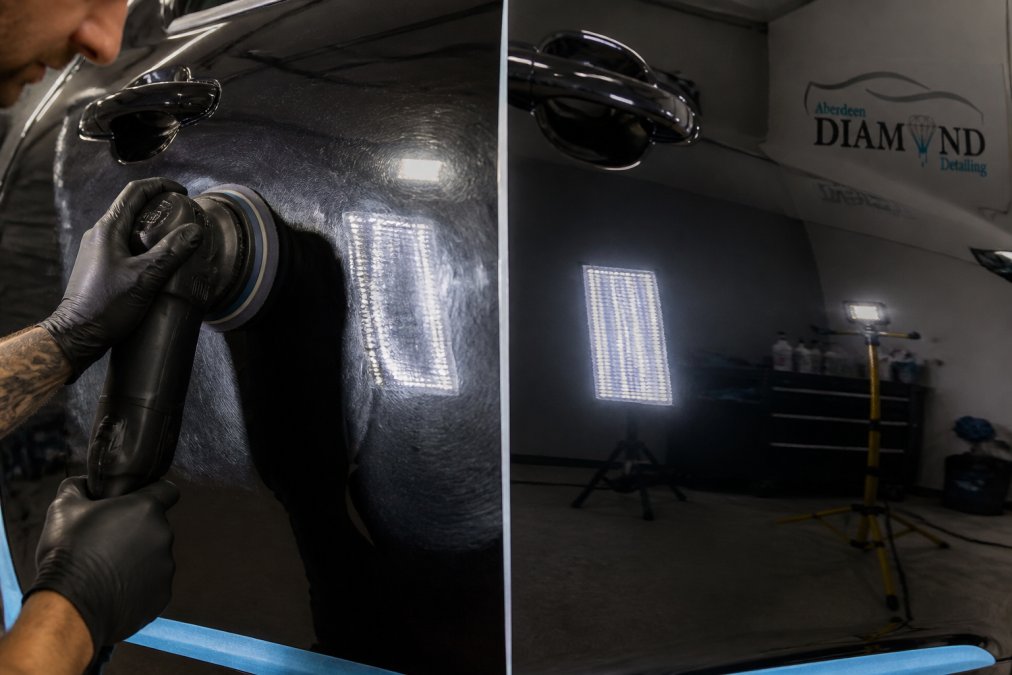
The practical rule: if you can feel a scratch with your fingernail, polishing will not fix it. Correction will.
Single Stage vs Multi Stage Paint Correction
Single stage correction uses one abrasive step to remove light-to-moderate defects and restore gloss. Multi stage correction uses two or three progressively finer steps, cutting deeper first, then refining, to remove heavier defects without leaving haze behind.
A common mistake is assuming more stages always means better results. In practice, the right number of stages depends on how much clear coat your paint has left and how deep the damage runs. A well-kept two-year-old car often needs only a single stage. A neglected daily driver exposed to road salt and grit usually needs two.
A paint thickness gauge reading before any machine work tells you how much clear coat is safe to remove. Skipping this step is how enthusiastic DIYers burn through paint.
Multi stage work takes longer and costs more, but it delivers a finish single stage work cannot match on badly swirled paint.
How Long Does Paint Correction Take?
Paint correction typically takes anywhere from four hours to three days, depending on the size of the vehicle, the severity of the defects and the number of stages required. A light single stage job on a small car might finish in an afternoon. A full multi stage correction on a large prestige vehicle can run across several days.
Factors that extend the timeline:
- Panel count and vehicle size
- Depth of scratches and oxidation
- Whether the paint needs decontamination first
- Curing time before any coating is applied
Rushing the process is the fastest way to leave holograms and buffer trails behind. As documented in guidance on vehicle care and surface protection, proper preparation matters as much as the correction itself.
Paint Correction vs Ceramic Coating: What’s the Difference?
Paint correction removes defects from the clear coat. Ceramic coating is a protective layer applied on top afterwards. They are not alternatives; they work in sequence.
Correction fixes what is wrong with the paint. A ceramic coating then seals that corrected surface, making it easier to clean and adding a layer of resistance against environmental fallout. Applying a coating over uncorrected paint locks in every swirl mark underneath, which is why reputable detailers correct first.
For owners weighing paint correction vs ceramic coating for new cars, the honest answer is that a brand-new car with healthy paint may need only a light polish before coating. A car with existing defects needs correction first or the coating simply preserves the flaws.
DIY vs Professional Paint Correction: What You Need to Know
DIY paint correction is realistic for light defects on a healthy finish. Products such as Meguiar’s Ultimate Compound are accessible for enthusiasts working by hand or with a dual-action polisher. Professional correction is the better route for deep scratches, oxidised paint or prestige vehicles where a mistake is costly.
| Factor | DIY | Professional |
|---|---|---|
| Best for | Light swirls, healthy paint | Deep defects, prestige cars |
| Risk | Uneven finish, paint thinning | Low, measured process |
| Tools needed | DA polisher, compounds, pads | Thickness gauge, multi-stage kit |
| Time | A weekend | Half a day to several days |
The thing nobody tells you about DIY correction is that a dual-action polisher can still burn through clear coat in the wrong hands. On a performance car with soft paint, the margin for error is thin.
Machine polishing without checking paint thickness first can remove too much clear coat, leaving a permanent dull patch that no further polishing can fix.
Which Process Does Your Car Actually Need?
Match the process to the condition of your paint, not to what sounds most impressive. A careful inspection under proper lighting tells you everything.
- Light swirl marks, healthy paint: a single stage polish is enough.
- Moderate scratches and haze: two-stage correction, then protection.
- Heavy oxidation or deep scratches: multi stage correction with a thickness assessment.
- Brand-new car: light polish, then ceramic coating to preserve the finish.
Our paint protection film and ceramic coating work sits on top of properly corrected paint, which is what keeps a finish looking flawless.
The takeaway is simple. Polishing refines, correction restores. Know which one your paint needs before you book anything, and the results will speak for themselves.
Frequently Asked Questions
Is paint correction the same as polishing?
No. Polishing is a finishing step that refines the surface and boosts gloss. Paint correction is a broader process that uses abrasive compounds and machine polishers to permanently remove swirl marks, scratches, and oxidation from the clear coat. Polishing can be part of paint correction, but correction goes further by levelling the clear coat to eliminate defects rather than just masking them. If your paint has visible swirls under sunlight, you likely need correction, not just a polish.
How long does paint correction last on a vehicle?
Paint correction permanently removes the defects it addresses, so the results last until new damage occurs. How long that takes depends on how you wash and protect the car. Using a safe two-bucket wash method and applying a ceramic coating or paint protection film after correction helps preserve the finish for years. Without proper aftercare, swirl marks can return within months, especially on darker paintwork where defects show more easily.
Can I perform paint correction at home or do I need a professional?
Light polishing with a dual-action machine and a consumer compound such as Meguiar’s Ultimate Compound is achievable at home for minor defects. However, multi-stage correction requires paint thickness readings, the right pads and compounds, and experience to avoid burning through the clear coat. If your car has deep scratches, oxidation, or you own a prestige vehicle, a professional detailer will assess the paint safely and deliver consistent results without risking damage.
What is the difference between single-stage and multi-stage paint correction?
Single-stage correction uses one combination of pad and compound to remove light swirls and restore gloss in a single pass. Multi-stage correction involves two or more steps, typically a cutting stage to remove deeper defects followed by a refining stage to maximise clarity. Single-stage suits well-kept paint with minor imperfections, while multi-stage is needed for neglected or heavily swirled finishes. A detailer will assess your paint and recommend the appropriate level.
Does polishing remove deep scratches from car paint?
Polishing removes fine swirl marks and light surface scratches that sit within the clear coat. Deep scratches that you can feel with a fingernail have usually penetrated through the clear coat, and polishing alone will not fix them. In those cases, paint correction with a more aggressive cutting stage may reduce their appearance, but scratches down to the primer or base coat often require touch-up paint or respraying. A professional assessment will confirm what is achievable.