
Table of Contents
- How Long Does Ceramic Coating Last on Cars
- Factors That Affect How Long Ceramic Coating Lasts
- Ceramic Coating Maintenance Tips for Extended Durability
- Signs Ceramic Coating Is Failing on Your Vehicle
- Professional vs DIY Ceramic Coating Durability
- Ceramic Coating vs Wax: Which Lasts Longer
- Maximising Your Ceramic Coating Investment
- Frequently Asked Questions
Last Updated: September 24, 2026
How Long Does Ceramic Coating Last on Cars
How long does ceramic coating last on cars? The answer depends on several interconnected factors, but most professional ceramic coatings maintain their protective properties for between two and five years with proper maintenance. This timeframe represents a significant investment in your vehicle’s appearance and long-term value, which is why understanding what influences durability matters so much.
Owners who understand the variables affecting ceramic coating longevity make better decisions about their paint protection strategy. A ceramic coating isn’t a one-time application and forget solution, it’s an active partnership between the product’s chemistry and your maintenance habits.
The durability of how long ceramic coating lasts on cars hinges on environmental exposure, maintenance frequency, driving habits, and the quality of the initial application. A coating applied to a poorly prepared surface will fail faster than the same product applied by a meticulous technician. Similarly, a vehicle garaged year-round in a controlled climate will see dramatically different results than one exposed to Scottish weather, road salt, and industrial fallout.
Factors That Affect How Long Ceramic Coating Lasts
The lifespan of ceramic coating depends on a combination of environmental and maintenance variables that work together to either extend or compress the coating’s protective window.
Environmental exposure stands as the primary determinant. Vehicles parked outdoors year-round face constant UV radiation, which gradually breaks down the resin structure of ceramic coatings. Coastal climates introduce salt spray that accelerates degradation. Heavy rainfall, frost cycles, and temperature fluctuations all stress the coating’s bond to the paint beneath. A car garaged most of the time will retain its ceramic coating’s effectiveness far longer than an identical vehicle left outside.
Washing frequency and technique represent the second major factor. Vehicles washed every two weeks with proper pH-neutral soaps and soft microfibre cloths experience minimal coating wear. Conversely, automatic car washes with harsh brushes, high-pressure systems, and alkaline detergents can strip ceramic coatings prematurely. The irony is that owners who neglect washing, thinking they’ll preserve the coating, actually allow contaminants to etch and degrade it faster.
Driving environment matters more than most people realise. Daily motorway commuting exposes your paintwork to tar, brake dust, and industrial particles that bond to the surface. City driving in heavy traffic means constant exposure to exhaust particulates. Off-road use or gravel tracks accelerate stone chip damage. Conversely, gentle local driving with minimal motorway time extends coating life noticeably.
The quality of the initial application cannot be overstated. A ceramic coating applied over unprepped paint, without proper decontamination, paint correction, or surface etching, will fail within months. Professional application involves multiple preparation steps that amateur installers often skip. This is where the difference between professional and DIY ceramic coating durability becomes stark.
Ceramic Coating Maintenance Tips for Extended Durability
Extending how long ceramic coating lasts on cars requires consistency and attention to detail. The maintenance routine you establish in the first weeks after application sets the trajectory for the entire coating’s lifespan.
Establish a regular washing schedule. Most vehicles benefit from washing every two weeks during normal conditions, weekly during harsh weather or high-exposure periods. Use a two-bucket method: one bucket with soapy water, one with clean rinse water. Rinse your microfibre wash mitt between passes to avoid dragging contaminants across the paint. Always wash from top to bottom, allowing gravity to help remove loosened particles.
Use pH-neutral car shampoos exclusively. Alkaline soaps and household detergents strip ceramic coatings. Look for products specifically labelled as safe for coated vehicles. The investment in proper chemistry pays dividends over months and years.
Dry thoroughly after washing. Water spots form when minerals in tap water evaporate on the surface. Use a clean microfibre drying towel or compressed air to remove all moisture. Some owners use distilled water for a final rinse to minimise mineral deposits.
Apply maintenance coatings or toppers annually. Many professional detailing services offer ceramic coating maintenance products, lighter versions of the original coating that refresh the protective layer. These toppers are simpler to apply than full ceramic coatings and significantly extend the original coating’s effective lifespan. Think of them as extending the warranty on your paint protection.
Avoid parking under trees or near industrial areas. Tree sap, bird droppings, and industrial fallout are among the most aggressive contaminants for ceramic coatings. If you must park in these environments, wash more frequently and consider applying a protective spray coating between washes.
Park in shade whenever possible. UV radiation degrades ceramic coatings. A garage, carport, or shaded spot slows the degradation process considerably. Even a car cover provides meaningful protection during extended periods of non-use.
Signs Ceramic Coating Is Failing on Your Vehicle
Recognising when your ceramic coating is degrading allows you to take corrective action before the underlying paint suffers damage.
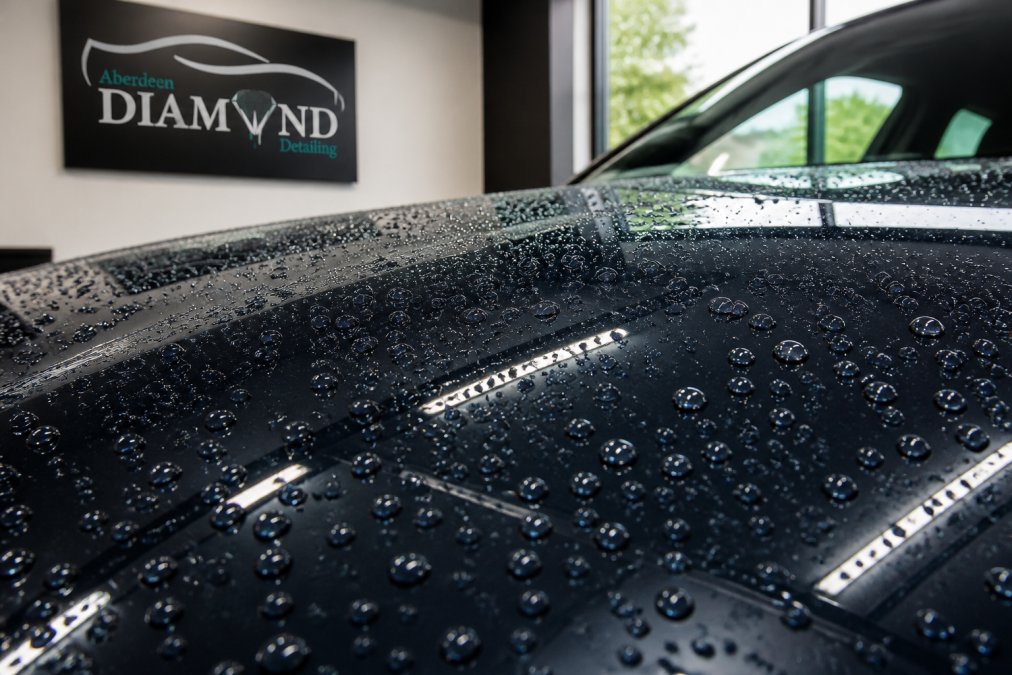
Loss of water beading is often the first visible sign. When you pour water on a healthy ceramic coating, it forms tight, spherical beads that roll off the surface. As the coating degrades, water spreads into flat sheets and soaks into the paint rather than beading. This transition from hydrophobic to hydrophilic behaviour indicates the coating’s protective barrier has weakened significantly.
Visible swirl marks and light scratches that weren’t present before suggest the coating’s hardness has diminished. A strong ceramic coating resists minor contact marks. When fine scratches appear from normal washing, the coating is likely near the end of its protective life.
Dull or hazy appearance across large areas indicates contamination bonding to the surface or the coating itself becoming opaque. Professional detailing can sometimes restore clarity through clay bar treatment or light polishing, but persistent haziness signals coating failure.
Difficulty achieving a deep gloss when you wash and dry the vehicle suggests the coating’s reflective properties have degraded. A failing coating often looks flat or matte compared to its original mirror-like finish.
Uneven protection where some areas show strong water beading whilst others don’t indicates the coating has worn unevenly, often due to environmental factors or washing technique differences.
Professional vs DIY Ceramic Coating Durability
The durability difference between professional and DIY ceramic coating applications is substantial and worth understanding before committing to either approach.
Professional ceramic coatings typically last two to five years because the application process is controlled and meticulous. Technicians use specialised equipment to measure paint thickness, ensuring they’re not applying coating over existing damage. They perform multi-stage surface preparation: clay bar decontamination, paint correction to remove swirls and scratches, and chemical etching to create microscopic surface texture that allows the coating to bond molecularly rather than mechanically.
Professional application also involves controlled environmental conditions, temperature, humidity, and dust levels are monitored. The coating cures properly, and the technician applies additional layers if needed for enhanced durability. This precision costs more upfront but delivers consistent, predictable results.
DIY ceramic coatings often fail within six to eighteen months because application conditions are rarely ideal. Many DIY installers skip paint correction entirely, applying coating over existing scratches and swirl marks. Without proper surface preparation, the coating bonds poorly and begins peeling or flaking within months. Humidity, temperature fluctuations, and dust in the garage compromise curing. Uneven application thickness means some areas receive adequate protection whilst others remain vulnerable.
The temptation to save money on DIY application often costs more in the long run, either through early failure requiring reapplication or through paint damage that necessitates professional correction and recoating.
Ceramic Coating vs Wax: Which Lasts Longer
The comparison between ceramic coating and traditional wax reveals why ceramic coatings have become the industry standard for serious paint protection.
Wax provides excellent hydrophobic properties and a beautiful gloss, but it lasts only three to six months under normal driving conditions. Wax is an organic material that oxidises and breaks down through UV exposure and chemical attack. It requires reapplication four times yearly to maintain consistent protection. The application process is straightforward, most owners can wax their own vehicle, but the frequent reapplication becomes tedious and expensive over time.
Ceramic coating lasts two to five years, meaning you reapply only once every few years rather than four times annually. The coating’s silicon dioxide base is inorganic and far more resistant to UV degradation and chemical attack than wax. Once properly cured, it requires no special maintenance beyond regular washing and occasional topper applications.
The durability advantage of ceramic coating becomes clear in cost-per-year calculations.
Maximising Your Ceramic Coating Investment
Getting the maximum lifespan from your ceramic coating requires understanding that durability is a shared responsibility between the product and the owner’s maintenance commitment.
Frequently Asked Questions
Does ceramic coating last forever?
No. Ceramic coating is not permanent. Professional-grade ceramic coatings typically last between 2 to 5 years, depending on the product quality, application method, and maintenance routine. Consumer-grade DIY kits often last 6 to 12 months. Even the most durable ceramic coatings gradually break down under exposure to UV light, oxidation, and environmental contaminants. Regular maintenance can extend the lifespan, but eventually the coating will need reapplication.
What factors reduce the lifespan of ceramic coating?
Several factors shorten ceramic coating durability: harsh Scottish weather including rain and salt spray, frequent washing with improper techniques, exposure to bird droppings and tree sap, parking under trees, UV radiation, and road salt during winter months. Additionally, the quality of the original surface preparation and the coating product itself significantly impact longevity. Vehicles driven frequently or exposed to industrial fallout experience faster degradation than garaged cars.
Is professional ceramic coating more durable than DIY kits?
Yes, professional ceramic coatings are substantially more durable than DIY alternatives. Professional-grade products contain higher concentrations of active ingredients and are applied under controlled conditions by trained technicians, ensuring proper bonding to the paintwork. Professional applications typically last 2 to 5 years, whilst DIY ceramic coating kits usually last only 6 to 12 months. Professional coatings also include proper surface preparation, which is critical for longevity and often overlooked in DIY applications.
How can I tell if my ceramic coating has worn off?
Watch for these warning signs: water no longer beads on the surface but instead sheets or pools, the paint loses its glossy appearance and looks dull, water spots form easily after washing, and the paint feels less slippery when you run your hand across it. You may also notice increased water staining, swirl marks becoming visible again, and contaminants adhering more readily to the surface. If your car was previously protected and now shows these signs, the ceramic coating has likely failed and needs reapplication.